Secure Cloud and Hybrid Implementations
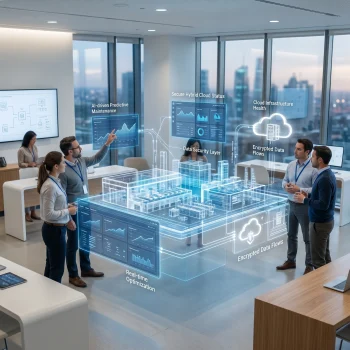
A Secure Cloud and Hybrid Implementation focuses on building and managing cloud environments — whether public, private, or hybrid — in a way that maintains security, operational visibility, and control across the entire infrastructure. It ensures workloads, applications, and data can operate seamlessly between on-premises systems and cloud platforms without introducing unmanaged risks, security gaps, or operational blind spots. At 3C ITS Cybernara, secure cloud and hybrid implementation means designing environments where security is integrated into every layer of the architecture from the beginning rather than added reactively later. Identity management, access controls, storage security, compute resources, networking, monitoring, and governance are all structured together as part of a unified operational model.
Public, Private, and Hybrid Cloud — Understanding the Difference
Not all cloud environments operate the same way, and different organizations require different levels of control, scalability, and security. Understanding the differences between public, private, and hybrid cloud models is essential because each approach changes how infrastructure is managed, where responsibilities lie, and how security must be enforced.
Public Cloud — Scalable and Flexible
Public cloud environments are operated by providers such as AWS, Microsoft Azure, or Google Cloud. Infrastructure resources are shared across multiple customers, while workloads remain logically isolated through virtualization, identity management, and access controls.
Public cloud platforms offer rapid deployment, scalability, and operational flexibility. However, organizations trade direct physical control for convenience and automation. Security in public cloud environments depends heavily on proper configuration, access governance, monitoring, and least-privilege controls.
Private Cloud — Greater Control With Higher Operational Responsibility
Private cloud environments are dedicated exclusively to a single organization and may operate either on-premises or within a dedicated hosting environment. This model provides increased control over infrastructure, compliance requirements, data residency, and custom configurations.
Because organizations maintain greater ownership of the infrastructure, they also assume greater responsibility for patching, access management, maintenance, and operational security. Strong governance and disciplined operational management become critical for maintaining stability and security.
Hybrid Cloud — Combining Flexibility and Control
Hybrid cloud environments combine public cloud scalability with private infrastructure control. Organizations may keep sensitive systems or regulated data in private environments while using public cloud platforms for scalability, processing power, or application delivery.
This approach offers flexibility, but it also introduces significantly more complexity. Workloads, identities, applications, and data move between environments with different architectures, controls, and operational models. Security must remain consistent across all layers instead of being managed independently in isolated systems.
Regardless of the cloud model, one principle remains constant: as environments become more distributed, security depends increasingly on coordination, governance, and visibility rather than isolated configurations alone.
How Security Risks Differ Across Public, Private, and Hybrid Cloud Environments
While the core threats remain similar across all environments — including ransomware, unauthorized access, insider misuse, and data exposure — the way those threats emerge changes depending on the cloud model and operational structure.
Public Cloud — Misconfiguration Becomes the Primary Risk
In public cloud environments, attackers rarely target the cloud provider directly. Instead, they exploit customer-side weaknesses such as exposed storage buckets, weak API keys, excessive permissions, or poorly managed identities.
Security in public cloud environments relies heavily on continuous visibility, automated monitoring, centralized identity governance, and strict least-privilege access models. Small configuration mistakes can quickly create significant exposure if they remain undetected.
Private Cloud — Internal Trust Creates Operational Risk
Private cloud environments are controlled internally, which means operational discipline becomes critical. Risks often emerge through mismanaged credentials, outdated systems, excessive administrative access, or inconsistent infrastructure maintenance.
Security in private cloud environments depends on strong patch management, segmentation, role separation, access governance, and zero-trust principles applied internally — not only at the perimeter.
Hybrid Cloud — Complexity Creates Security Gaps
Hybrid environments introduce additional risk because systems operate across different infrastructures, networks, and governance models simultaneously. A secure configuration in one environment may still create vulnerabilities if controls are not synchronized across connected systems.
Common risks in hybrid environments include inconsistent IAM policies, fragmented logging, poorly managed integrations, unsynchronized security controls, and network paths that bypass centralized monitoring.
Effective protection in hybrid environments depends on unified visibility, centralized monitoring, coordinated governance, and consistent security policies that follow workloads across both cloud and on-premises infrastructure.
The Core Layers of a Secure Cloud Architecture
Effective cloud security is built through multiple connected layers, with each layer protecting a different part of the environment. Together, these controls create a structured security model that improves resilience, visibility, scalability, and operational stability across cloud and hybrid infrastructures. At 3C ITS Cybernara, we design cloud security as an integrated architecture rather than a collection of disconnected tools.
Identity and Access Management Layer
Security begins with identity. Every user, service account, application, and API must be authenticated, authorized, and restricted to only the access they genuinely require.
We implement centralized identity governance using role-based access control (RBAC), multi-factor authentication (MFA), least-privilege policies, conditional access controls, and secure identity management practices to reduce unauthorized access risks.
Network Segmentation and Connectivity Layer
Flat or loosely segmented networks allow threats to move laterally across environments once access is gained. Secure cloud architecture relies on segmentation and controlled communication between systems.
3C ITS Cybernara designs zero-trust network architectures that isolate workloads, restrict unnecessary communication paths, and reduce exposure across cloud, on-premises, and hybrid environments.
Data Protection and Encryption Layer
Data remains one of the most critical assets in any environment. Strong protection requires encryption, governance, classification, and secure storage controls throughout the entire data lifecycle.
We secure data both at rest and in transit using encryption standards, secure key management, tokenization, backup protection, and controlled retention policies to reduce the impact of unauthorized access or infrastructure compromise.
Application and Workload Security Layer
Applications, containers, virtual machines, and workloads must be continuously monitored and secured against vulnerabilities, outdated dependencies, and insecure configurations.
Our approach includes vulnerability management, secure containerization practices, patch management, workload hardening, dependency monitoring, and continuous validation to reduce exposure to application-level threats.
Monitoring, Detection, and Response Layer
Even well-secured environments require continuous monitoring and rapid incident response capabilities. Visibility across systems is essential for identifying suspicious behavior before it escalates into a larger security incident.
We integrate centralized logging, SIEM platforms, behavioral analytics, cloud monitoring, and alert correlation across cloud and hybrid systems to improve detection and response capabilities.
Governance, Compliance, and Policy Layer
Security controls are only effective when they are consistently enforced and operationally maintained. Governance ensures environments remain aligned with internal standards, industry frameworks, and compliance requirements.
3C ITS Cybernara implements automated policy enforcement, compliance monitoring, security baselines, audit visibility, and governance frameworks aligned with standards such as CIS, NIST, ISO 27001, and regulatory requirements.
How 3C ITS Cybernara Secures Cloud and Hybrid Environments
No organization can guarantee absolute security, but 3C ITS Cybernara focuses on securing the areas that matter most across public, private, and hybrid cloud environments. Our approach connects identity, infrastructure, governance, monitoring, and operational security into one coordinated security model rather than treating them as isolated systems.
Identity and Access Security
Access management is the foundation of cloud security. We centralize identity governance across cloud and on-premises systems while enforcing least-privilege access principles, strong authentication controls, and secure service account management.
This reduces excessive permissions, eliminates unmanaged credentials, and strengthens operational control across environments.
Configuration Management and Compliance Alignment
Cloud misconfigurations remain one of the leading causes of security incidents. We continuously assess environments against recognized frameworks such as CIS, NIST, and ISO standards while automating configuration validation and compliance monitoring.
This helps maintain secure baselines and audit readiness as environments evolve.
Data Security and Privacy Protection
Data protection is treated as an ongoing operational discipline rather than a one-time implementation. Sensitive information is encrypted, classified, monitored, and governed consistently across cloud platforms, storage systems, databases, backups, and shared workloads.
Network Segmentation and Workload Protection
Hybrid and multi-cloud environments require strong segmentation and workload isolation. We implement zero-trust networking principles, controlled connectivity, workload isolation, and continuous threat monitoring across regions, providers, and environments.
Centralized Monitoring and Incident Visibility
Security visibility is critical for rapid response and operational awareness. Our monitoring approach correlates activity across cloud APIs, identity systems, infrastructure logs, and operational platforms to provide centralized visibility into threats and anomalies.
Governance and Operational Alignment
Technology alone cannot secure an environment without operational alignment. We help organizations establish governance structures, ownership models, policies, and operational workflows that support long-term cloud security and scalable operational maturity.
At 3C ITS Cybernara, secure cloud architecture is designed as a continuous operational model — one that evolves alongside the organization while maintaining visibility, control, and resilience across every layer of the environment.
Why Choose 3C ITS
Experienced Technical Team
SLA-Driven Support
Remote + Onsite Support
Proactive Monitoring
Multi-Vendor Expertise
Scalable IT Operations
Empower Your Workforce with Reliable IT Support
At 3C ITS, we believe technology support should be proactive, responsive, and business-focused. Our End-User Support & Helpdesk Services help organizations improve employee productivity, reduce downtime, strengthen IT operations, and maintain secure digital workplaces.
Whether you require a centralized helpdesk, onsite IT engineers, endpoint management, or enterprise-wide support services, 3C ITS delivers dependable IT support solutions tailored to your business needs.
A properly managed hybrid setup can be as secure as a private one.